• Skip to primary navigation
  • Skip to main content
  • Skip to primary sidebar
  • Skip to footer

Bowdoin Science Journal

  • Home
  • About
    • Our Mission
    • Our Staff
  • Sections
    • Biology
    • Chemistry and Biochemistry
    • Math and Physics
    • Computer Science and Technology
    • Environmental Science and EOS
    • Honors Projects
    • Psychology and Neuroscience
  • Contact Us
  • Fun Links
  • Subscribe

Chemistry and Biochemistry

MMOF Hydrogels: A New Tool in Aquatic Dye Removal

December 12, 2025 by Sebastian Ortiz Gonzalez '29

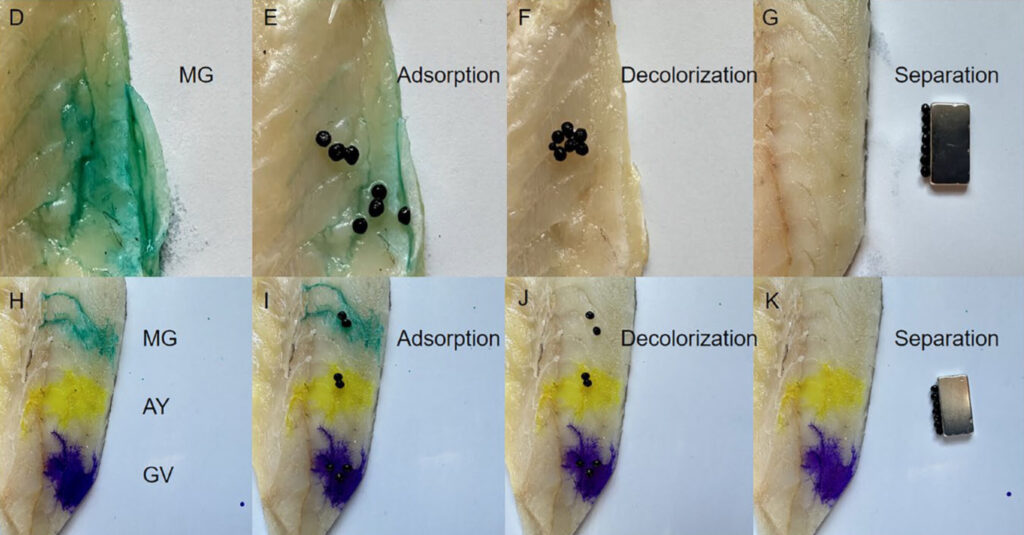
MMOF hydrogels placed on fish tissue with MG and other dyes on the surface. The hydrogels fully remove the MG dye.

Every year, over 280,000 tons of synthetic dyes are introduced into aquatic environments as wastage from textile mills. This significant amount of runoff accounts for the augmentation of environmental contamination in several countries, including China, and can have detrimental effects on aquatic life. For example, decreased red blood cell count has been observed in mosquitofish, and liver degeneration in Mozambique tilapia (Dutta et al. 2024).

Previous studies have attempted to use polyacrylamide hydrogels to selectively remove contaminants from an environment. However, the process of creating these hydrogels was found to be too complex and therefore impractical for real-world applications (He et al. 2021). Cheng et al. describe a sodium alginate hydrogel with increased selectivity to a pollutant, malachite green (MG) dye, and heightened adsorptive properties through enhancement with magnetic and MOF materials. 

Metal-organic frameworks, or MOFs, are a class of crystalline materials that are made up of a metal ion or cluster and organic linkers. They are extremely porous (~90% free volume) and have extremely high internal surface areas (beyond 6000m^2/g) (Zhou, Long, Yaghi. 2012). These properties, along with the adjustability of their composition, have made MOFs of interest for applications as high-capacity adsorbents for pollutants.

To create their MOF, the researchers dissolved two metal solids, FeCl3·6H2O & FeCl2·4H2O, in water and ethanol, centrifuged, and collected Fe3O4 nanoparticles. They then added another hydrated metal, ZrOCl2·8H2O, and TCPP (the organic linker) to the solution, washed with DMF solvent to dissolve the metals and linkers, and obtained their MOF: Fe3O4@MOF-545 with an average particle size of 1100nm.
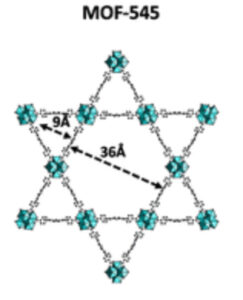
Structure of a Zr-based MOF-545
Figure 1. Zr-based MOF-545. Adapted from 2024 Chen et al.


Next, they created a solution of their MOF, 4.2% sodium alginate, TEMED, and acrylamide to form the polyacrylamide hydrogel. The resulting solution was added drop-by-drop to a CaCl2 solution to form microspheres and stirred magnetically for an hour to obtain the MMOF hydrogel (magnetic MOF hydrogel). The researchers used scanning electron microscopy to characterize the MMOF hydrogel and found that the MMOF hydrogel had a microporous structure and clear surface grooves, enhancing its surface area and adsorptive capacity. (Figure 2)
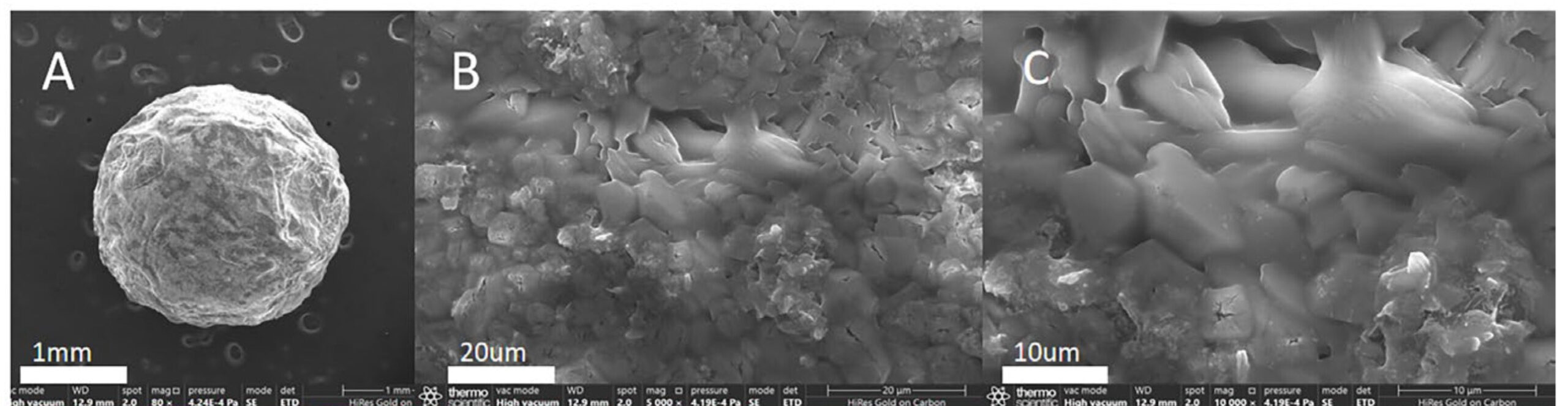
Scanning electron microscopy of the MMOF hydrogel. The surface grooves and external and internal porous structure are visible.
Figure 2. (A) SEM image of MMOF hydrogel. (B-C) Notable grooves are seen on the surface of the MMOF hydrogel. Adapted from 2025 Cheng et al.

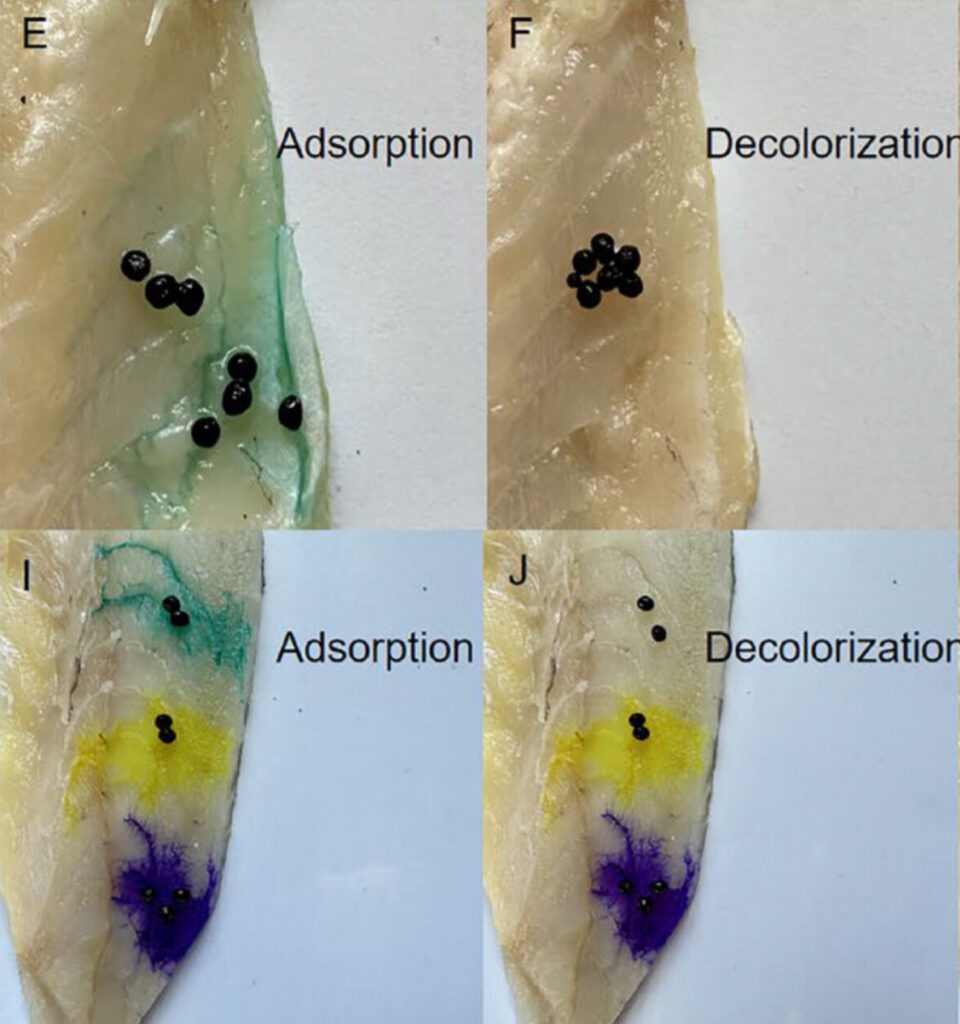
To confirm the heightened performance of the MMOF hydrogel, the researchers compared its dye adsorption and selectivity for MG dye compared to a magnetic hydrogel and a pure hydrogel.  The resulting MMOF hydrogel was found to be a significantly more effective adsorptive agent for MG dye than the other types of hydrogels (Figure 3), further showing the effectiveness of MOFs in increasing adsorption. The MMOF hydrogel also displayed enhanced selectivity to MG dye when applied to the surface of aquatic tissues in situ (Figure 4). 


Picture of hydrogel, MOF hydrogel, and MMOF hydrogel placed in solution containing MG dye. The container with MMOF hydrogel is the only one that became clear with no blue color left over, showing the higher adsorption rate of the MMOF hydrogel. The graph to the right of the image further supports this as MMOF hydrogel adsorption rate is over 90%.
Figure 3. Adsorption rate of MMOF hydrogel compared to magnetic hydrogel and hydrogel. MMOF hydrogel displayed greater MG dye adsorption than the magnetic hydrogel and hydrogel. Adapted from 2025 Cheng et al.


MMOF hydrogels placed on fish tissue with MG and other dyes on the surface. The hydrogels fully remove the MG dye.
Figure 4. MMOF hydrogel selectivity tested through application of fish tissue containing MG, acridine yellow, methylene blue, carmine, and crystal violet dyes. MMOF hydrogel shown to selectively remove MG dye from environment when in proximity to other dyes. Adapted from 2025 Cheng et al.

Cheng et al. then tested MMOF hydrogels with different characteristics to find material and environmental conditions for optimal adsorption. They found that sodium alginate concentration and MOF:hydrogel weight ratio were associated with the adsorptive capacity of the MMOF hydrogels. The optimal sodium alginate concentration was found to be 4.2%, and the optimal MOF:hydrogel weight ratio was found to be 12.

The researchers also tested the MMOF hydrogel in different environmental conditions to determine its limitations and where it performed best. They observed that the MMOF hydrogels showed the greatest adsorption at an MG dye concentration of 100mg/L (Figure 5A). This is due to the increased competition of MG molecules for adsorption sites on the surface of the MMOF hydrogel at higher concentrations. They also found that adsorption plateaued at MMOF hydrogel weight concentrations higher than 20mg/mL (Figure 5B) due to the adsorption sites on the hydrogel reaching equilibrium. Additionally, adsorption was highest at an MG solution pH of 6 (Figure 5C). At lower pH, H+ ions would compete with MG by due to the negatively charged functional group on the MMOF hydrogel. At higher pH, the carboxyl group on the MMOF hydrogel is ionized, decreasing the adsorption rate of MG dye. The adsorption rate of MG dye by the MMOF hydrogel was also found to show little decrease after 25 days of storage at 60ºC, indicating the strong stability of the material. 
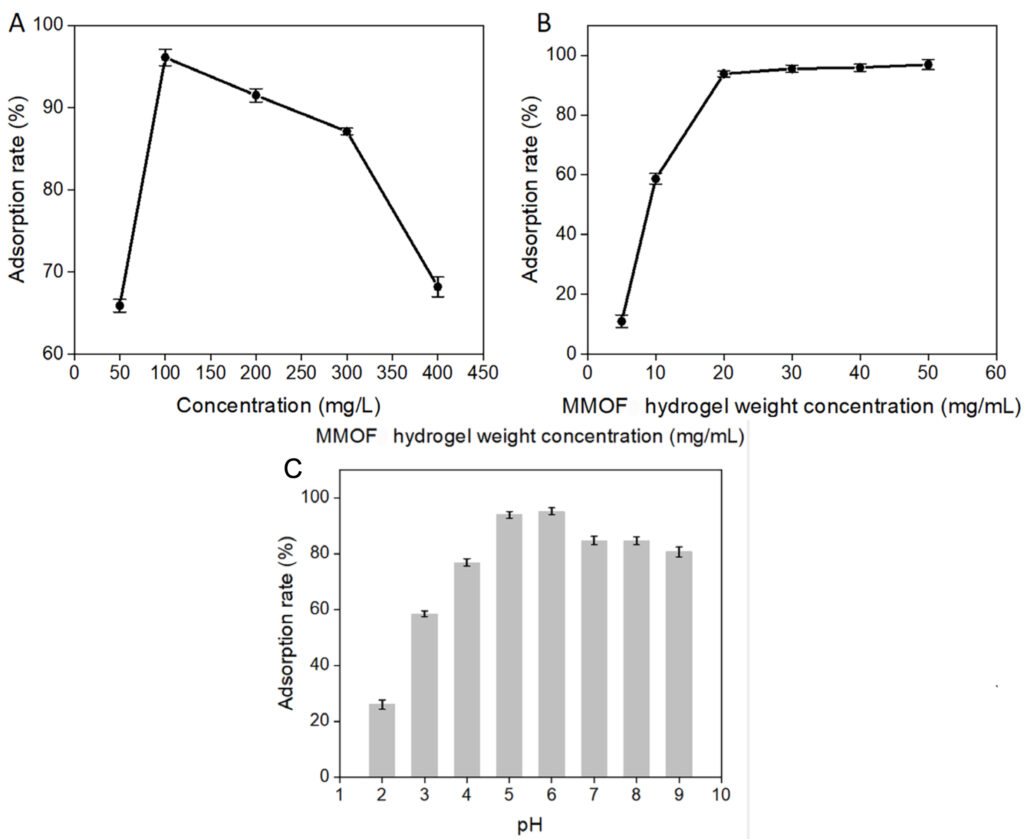
Image containing Graphs A, B, C.A: Conc. vs adsorption rate. Adsorption rate peaks at conc of 100mg/L B: MMOF hydrogel weight concentration vs adsorption rate. adsorption rate peaks at 20mg/ml C: pH vs adsorption rate. Adsorption rate peaks at pH 6.
Figure 5. (A) MMOF hydrogel MG dye adsorption rate peaked at MG concentration of 100 mg/L. (B) Adsorption remains almost the same at MMOF hydrogel weight concentrations of 20mg/L and higher. (C) When the concentration of the MG solution is 100 mg/mL, the pH of the MG solution alters the adsorptive capacity of the MMOF hydrogel with the highest adsorption being observed at pH 6. Adapted from 2025 Cheng et al.

In their work, Cheng et al. have successfully created stable and easy-to-replicate MMOF hydrogels showing high adsorptive capacity and selectivity to MG dye for aquatic tissue in situ. The easily modifiable structure of MOFS also opens the door to the production of MMOF hydrogels selective to other dyes as well. This research has great potential applications for the pretreatment of aquatic products like fish before they reach the market. If automated and integrated into the screening processes of aquatic products, these MMOF hydrogels could strengthen quality control and increase the safety of products that are entering the market.


References

Chen, H., Brubach, J.-B., Tran, N.-H., Robinson, A. L., Ferdaous Ben Romdhane, Mathieu Frégnaux, Francesc Penas-Hidalgo, Solé-Daura, A., Mialane, P., Fontecave, M., Dolbecq, A., & Mellot-Draznieks, C. (2024). Zr-Based MOF-545 Metal–Organic Framework Loaded with Highly Dispersed Small Size Ni Nanoparticles for CO2 Methanation. ACS Applied Materials & Interfaces, 16(10), 12509–12520. https://doi.org/10.1021/acsami.3c18154

Cheng, L., Lu, Y., Li, P., Sun, B., & Wu, L. (2025). Metal–Organic Framework (MOF)-Embedded Magnetic Polysaccharide Hydrogel Beads as Efficient Adsorbents for Malachite Green Removal. Molecules, 30(7), 1560–1560. https://doi.org/10.3390/molecules30071560‌

Dutta, S., Adhikary, S., Bhattacharya, S., Roy, D., Chatterjee, S., Chakraborty, A., Banerjee, D., Ganguly, A., Nanda, S., & Rajak, P. (2024). Contamination of textile dyes in aquatic environment: Adverse impacts on aquatic ecosystem and human health, and its management using bioremediation. Journal of Environmental Management, 353(120103), 120103. https://doi.org/10.1016/j.jenvman.2024.120103‌

Zhou, H.-C., Long, J. R., & Yaghi, O. M. (2012). Introduction to Metal–Organic Frameworks. Chemical Reviews, 112(2), 673–674. https://doi.org/10.1021/cr300014x


Filed Under: Chemistry and Biochemistry Tagged With: Chemistry and Biochemistry, climate change

Fine-tuning of Chemotherapeutic Drug Reactions through Ruthenium Organic Complexes

December 4, 2023 by Ahmad Harb '25

The development of cancer treatment reagents aims at optimizing the reactivity of the reagent with the cellular DNA while reducing the reactivity with other bodily sites. This is in order to maximize cytotoxicity to cancer cells while reducing the side effects associated with chemotherapy (Wang, 2005).

Organometallic complexes, organic compounds with one or more metallic central atoms, have been used to control the release of compounds involved in key biological reactions (Renfrew, 2014). In the context of cancer chemotherapy, cisplatin complexes have been successfully developed to react with guanosine 5’ monophosphate, or GMP, as a potential binding site in the cell’s DNA, while avoiding the reactions associated with side effects (Dasari, 2014 & Reedjik, 2003).

The development of chemotherapeutic reagents requires the fine-tuning of the ligand substitution reactions that the organometallic complex can undergo. Ligand substitution reactions are reactions where one or more of the substituents bonded to the metal atom in the organometallic complex are replaced by a compound from the surrounding environment. An example is shown in the figure below.

Fig 1. Example of an organometallic complex undergoing a ligand substitution reaction. When dissolved in pyridine, the chromium complex, [Cr(TPP)(Br)(H2O)], reacts with the solvent, and two of its ligands (Br and OH2) are replaced by pyridine compounds (Py) (Okada, 2012). 

In a 2005 study, a group of chemists tested multiple ligand-substitution reactions of Ruthenium (Ru) complexes to test the possibility of the development of a competitor for cisplatin in chemotherapy (Wang, 2005). The Ruthenium complex studied have “stool”-like structures with an arene upper part and a tetrahedral Ruthenium compound which contains the leaving group. The researchers use X-ray crystallography and other characterization methods to identify the structure of every ruthenium complex involved in the study.

Fig 2. The structure of the Ruthenium organometallic complexes tested in the study. The basic structure is shown on the upper left. The “arene” can be any of the structures shown, while the leaving group, X, can be any of the structures shown as well as a halide or pseudohalide (Wang, 2005). 

Given the high concentration of chloride anions in the bloodstream and the intercellular fluid, the substitution of X by chloride is a main mechanism by which the reagent is lost before it can attack cancer cells (Wang, 2005). Previous research has shown that hydrolysis (substitution of X by a water molecule) is an essential activation step in the reagent’s reaction with GMP (Chen, 2003). The researchers thus investigated how the choice of the arene and the leaving group within the ruthenium complex can affect the reaction rates such that the reagent is cytotoxic but is inactive before reaching its target site. 

The reaction rate with chloride was established by dissolving the complexes in a 104mM NaCl solution, mimicking the high-chloride media within the body, and monitoring the formation of the substitution reaction product using the same characterization methods involved in the identification of the complexes.

The hydrolysis rate was established by allowing the aqueous solutions of the complexes to equilibrate for 24-48 hours at 37°C, mimicking body temperature. The formation of the hydrolysis product was monitored using the same characterization methods. The reaction equilibria were determined using high-performance liquid chromatography. 

The reaction with GMP is believed to be the final step in the reagent’s activityagainst cancer cells. The reaction rate was established by dissolving 0.5mM of each complex in a 0.5mM aqueous GMP solution. The product formation rate was determined using the same methods as the other reactions.

The researchers summarized their key resultsin the table below:

The data show that complex 13, for example, has a faster reaction rate with chloride than GMP, and will, therefore, be lost before attacking cancer cells if it were to be used as a chemotherapyreagent. Data shows that complexes 15 and 17, on the other hand, react faster with water and GMP than chloride, which makes them more suitable for chemotherapy. Complex 1 can undergo hydrolysis and react with GMP at a relatively high rate. A key finding in this research is that complex 21 can bind to GMP without undergoing hydrolysis, skipping a previously thought required first step. 

The overall cytotoxicity of each complex was compared to cisplatin by determining the concentration of the complex which caused at least 50% inhibition in the growth of ovarian cancer cells, IC50 values. As previous research predicted, high hydrolysis rates correlated with high cytotoxicity (Chen, 2003). Cisplatin has IC50 = 0.6µM; chemotherapy reagents are considered to have good cytotoxic activity if they have IC50 < 18µM. Some of the same complexes discussed above, with the exception of complex 17 and 21 had IC50 values competitive with cisplatin (IC50 < 6µM). Furthermore, the studied Ru complexes exhibited cytotoxicity towards cisplatin-resistant ovarian cancer cells (Wang, 2005).

Overall, the results show that the rates of the reactions involved in chemotherapy can be fine tuned by the choice of the ligand within the ruthenium complex. These results can be used in the future development of novel chemotherapy reagents.  

Work Cited:

Chen, H., Parkinson, J. A., Morris, R. E., & Sadler, P. J. (2003). Highly selective binding of organometallic ruthenium ethylenediamine complexes to nucleic acids: novel recognition mechanisms. Journal of the American Chemical Society, 125(1), 173-186.

Dasari, S., & Tchounwou, P. B. (2014). Cisplatin in cancer therapy: molecular mechanisms of action. European journal of pharmacology, 740, 364-378.

Okada, K., Sumida, A., Inagaki, R., & Inamo, M. (2012). Effect of the axial halogen ligand on the substitution reactions of chromium (III) porphyrin complex. Inorganica Chimica Acta, 392, 473-477.

Reedijk, J. (2003). New clues for platinum antitumor chemistry: kinetically controlled metal binding to DNA. Proceedings of the National Academy of Sciences, 100(7), 3611-3616.

Renfrew, A. K. (2014). Transition metal complexes with bioactive ligands: mechanisms for selective ligand release and applications for drug delivery. Metallomics, 6(8), 1324-1335.

Wang, F., Habtemariam, A., van der Geer, E. P., Fernández, R., Melchart, M., Deeth, R. J., … & Sadler, P. J. (2005). Controlling ligand substitution reactions of organometallic complexes: Tuning cancer cell cytotoxicity. Proceedings of the National Academy of Sciences, 102(51), 18269-18274.

Filed Under: Biology, Chemistry and Biochemistry Tagged With: Chemistry and Biochemistry, Medicine

Primary Sidebar

CATEGORY CLOUD

Biology Chemistry and Biochemistry Computer Science and Tech Environmental Science and EOS Honors Projects Math and Physics Psychology and Neuroscience Science

RECENT POSTS

  • Cause of Sea Star Wasting Disease Epidemic Linked to Common Bacteria December 16, 2025
  • Co-pyrolysis of Biomass and RDF for Waste to Energy Conversion December 16, 2025
  • Lobsters and Telomerase: How to Reach Longevity December 15, 2025

FOLLOW US

  • Facebook
  • Twitter

Footer

TAGS

AI AI ethics Alzheimer's Disease antibiotics artificial intelligence bacteria Bathymetry Biology brain Cancer Biology Cell Biology Chemistry and Biochemistry Chlorofluorocarbons climate change Computer Science and Tech CRISPR Cytoskeleton Depression Dermatology dreams epigenetics Ethics Genes Gut microbiota honors Luis Vidali Marine Biology Marine Mammals Marine noise Medicine memory Montreal Protocol Moss neurobiology neuroscience Nutrients Ozone hole Plants Psychology and Neuroscience REM seabirds sleep student Technology therapy

Copyright © 2025 · students.bowdoin.edu