• Skip to primary navigation
  • Skip to main content
  • Skip to primary sidebar
  • Skip to footer

Bowdoin Science Journal

  • Home
  • About
    • Our Mission
    • Our Staff
  • Sections
    • Biology
    • Chemistry and Biochemistry
    • Math and Physics
    • Computer Science and Technology
    • Environmental Science and EOS
    • Honors Projects
    • Psychology and Neuroscience
  • Contact Us
  • Fun Links
  • Subscribe

Gut microbiota

Systemic Antibiotics for Acne: Implications for the Gut Microbiome

December 13, 2025 by Iselin Crosby ('29)

Are prescription antibiotics for acne worth it? Understanding the effects of long-term antibiotic usage on the gut microbiome offers new answers to this question.

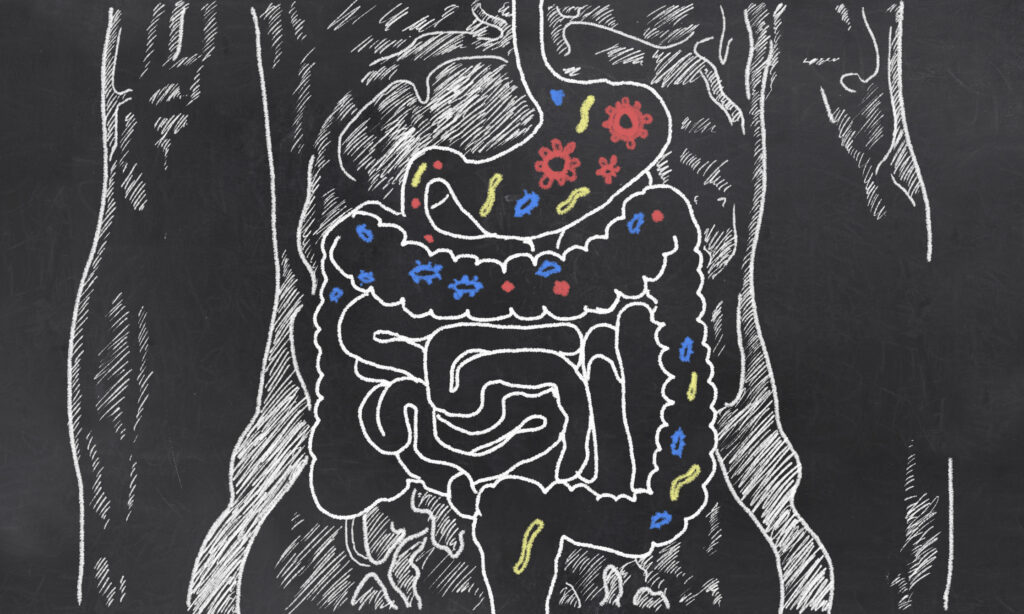
Home to a diverse population of over 100 trillion microorganisms, the gut microbiome boasts significant influence over skin health through a complex, bidirectional relationship known as the gut-skin axis. When the gut microbiome is in equilibrium, or balance, skin health is enhanced through the promotion of skin barrier function and a decrease in inflammation. However, when the gut microbiome is in dysbiosis, or imbalance, skin disorders like acne vulgaris are more likely to occur (Munteanu et al., 2025).

Acne vulgaris is a chronic illness classified by inflammatory lesions, or areas with abnormal or damaged tissue. The most common treatment for moderate-to-severe acne involves prescription tetracycline-class antibiotics, such as minocycline or doxycycline. These antibiotics act broadly against both Gram-positive and Gram-negative bacteria, which differ in their membrane and cell wall compositions. This broad-spectrum activity helps address acne by killing any bacteria that may be contributing to causative inflammation. However, this also results in disruptions to the microbial composition of the gut microbiome. To shed more light on this complicated relationship, Moura and colleagues sought to elucidate the impacts of long-term antibiotic usage on the gut microbiome in relation to the treatment of acne.

The experiment conducted by Moura et al. used in vitro gut models, consisting of live components outside of living organisms. Each of the three models was treated with a different tetracycline-class antibiotic before a recovery period to analyze the long-term consequences of each antibiotic treatment. The in vitro “Gut Models” comprised a triple-stage system with three vessels representing the proximal, medial, and distal colons. Within each model, in vivo physiological conditions – conditions that occur within biological organisms – including pH, oxygen content, temperature, and nutrient availability, were monitored. Reference Figure #1 for the experimental setup and timeline for each model.

Bacteria were introduced into all three vessels of the three models using fecal slurry (homogenized fecal matter) from five healthy adults who had not taken antibiotics in the past three months. Microbial populations had two weeks to reach a “steady state” before once daily treatment for three weeks with either 17 milligrams of sarecycline, 19.3 milligrams of minocycline, or 22 milligrams of doxycycline in models S, M, and D, respectively. Dosages were prepared based on reported antibiotic colonic values in humans.

Following antibiotic treatment, microbial populations in each model were monitored for three weeks in a microbiota recovery phase. This allowed the gut microbiome time to repopulate, if possible. Bacterial colonies were sampled daily from the models and subject to an enumeration protocol. In this procedure, they were grown on agar plates with different added components to distinguish microbial kinetics during antibiotic treatment and following withdrawal.
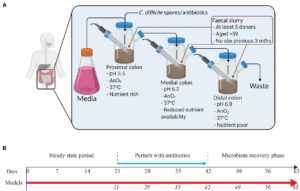
 

Diagram depicting the experimental gut model setup.
Figure 1: Experimental Gut Model (Moura et al., 2022)

Following the conclusion of the microbial recovery phase, results pertaining to treatments of sarecycline, minocycline, and doxycycline, respectively, were achieved.

Single daily dosages of sarecycline resulted in a mean bioactive concentration of 15.9 mg/L across the three-week treatment regimen. However, levels of sarecycline became undetectable three days into the microbiota recovery phase. During treatment, microbial patterns indicated a significant decline in the Shannon diversity index, a baseline model for biodiversity. After week one, microbial diversity remained stable for the following two weeks of treatment. During the recovery phase, biodiversity increased, with many bacterial families returning to a healthy abundance.

Single daily dosages of minocycline resulted in a mean bioactive concentration of 27.4 mg/L. Significant decreases in microbial biodiversity were evident after three weeks of minocycline treatment. Dysbiosis was characterized primarily by the decrease of Bifidobacteriaceae and Lactobacillacea populations, coupled with an increase in Enterococcaceae and Enterobacteriaceae populations. During antibiotic withdrawal in the microbiota recovery phase, biodiversity was slow to recover, with several bacterial families failing to return to pre-treatment levels. Corynebacteriaceae, Planococcaceae, and Ruminococcaceae were nonexistent or marginally detectable at the end of the microbiota recovery phase.

Single daily dosages of doxycycline resulted in a mean bioactive concentration of 23.8 mg/L. Inconsistencies in microbe populations and decreased diversity were evident during treatment. Lower numbers of Lactobacillaceae and Bacteroidaceae especially characterized dysbiosis during treatment. Conversely, an increased abundance of Burkholderiaceae and Enterobacteriaceae was observed during treatment. Return of Lactobacillaceae, Enterobacteriaceae, and Burkholderiaceae populations to pre-treatment levels was not observed during the recovery phase.

Analyzing results from the experiment, it can be concluded that broad-spectrum antibiotics may significantly impact long-term composition, diversity, and equilibrium of the gut microbiome. Considering experimental data, sarecycline treatment results in the least disruption to the gut microbiome, in comparison to minocycline and doxycycline. Following sarecycline withdrawal, the profile of the gut microbiome returned to pre-sarecycline levels, in contrast to the significant long-term disruption following minocycline and doxycycline treatment (Moura et al., 2022). Further research, conducted by Elvers and colleagues, suggests that antibiotic-induced dysbiosis may last as long as several months or years, sometimes never returning to its original profile (Elvers et al., 2020).

Considering the importance of a healthy and diverse gut microbiome for skin health, the use of broad-spectrum antibiotics such as minocycline and doxycycline can pose a long-term risk of both gut and skin dysbiosis. Choosing antibiotic treatments such as sarecycline, which have more targeted bacterial effects, may prove beneficial for long-term microbial homeostasis. Moreover, abstaining from antibiotic treatment for acne vulgaris unless absolutely necessary may be more favorable in the consideration of long-term gut and skin health.


References:

Campos, M. (2023). Leaky gut: What is it, and what does it mean for you? Harvard Health Publishing. https://www.health.harvard.edu/blog/leaky-gut-what-is-it-and-what-does-it-mean-for-you-2017092212451

Elvers, K. T., Wilson, V. J., Hammond, A., Duncan, L., Huntley, A. L., Hay, A. D., & Van Der Werf, E. T. (2020). Antibiotic-induced changes in the human gut microbiota for the most commonly prescribed antibiotics in primary care in the UK: a systematic review. BMJ Open, 10(9). https://doi.org/10.1136/bmjopen-2019-035677.

Moura, I. B., Grada, A., Spittal, W., Clark, E., Ewin, D., Altringham, J., Fumero, E., Wilcox, M. H., & Buckley, A. M. (2022). Profiling the Effects of Systemic Antibiotics for Acne, Including the Narrow-Spectrum Antibiotic Sarecycline, on the Human Gut Microbiota. Frontiers in Microbiology, 13. https://doi.org/10.3389/fmicb.2022.901911

Munteanu, C., Turti, S., & Marza, S. M. (2025). Unraveling the Gut–Skin Axis: The Role of Microbiota in Skin Health and Disease. Cosmetics, 12(4), 167. https://doi.org/10.3390/cosmetics12040167


Filed Under: Biology Tagged With: antibiotics, Dermatology, Gut microbiota

The Dark Side of Antibiotics

May 8, 2024 by Maya Lall '27

Antibiotics are medications that fight infections caused by bacteria. But they can also lead to mental health issues, such as anxiety and depression, later in life. 

The discovery of antibiotics was one of the greatest medical advances of the 20th century. Antibiotics have significantly reduced mortality from infectious diseases and increased average life expectancy. However, they have a variety of side effects, including cognitive impairment and emotional disorders in adulthood (Adedji 2016). 

Antibiotics destroy bacteria in the gut, which can disrupt brain function. Gut microbiota are an important component of the gut-brain axis–the two-way line of communication between the gastrointestinal tract and the central nervous system. Gut microbiota produce neurotransmitters that regulate mood, such as dopamine, norepinephrine, and serotonin, which travel through the vagus nerve to the brain (Karakan et al 2021). Previous studies have found that antibiotic-induced gut microbiota depletion causes dysfunction of the gut-brain axis, increasing anxiety and depression-related behaviors (Mosaferi et al 2021).

Aging plays an important role in the development of both gut microbiota and the brain. Microbiota first appear at birth and rapidly colonize the intestinal tract. The composition and diversity of gut microbiota resembles adult level by 2 years of age and remains stable throughout adulthood before decreasing in old age. The brain develops until the mid-to-late 20s and starts to decline in middle age. It has been shown that antibiotic-induced gut microbiota depletion has negative effects on the brain (Li et al 2022). However, no prior research has been done on this relationship during the different stages of life. This study aimed to determine the connection between gut microbiota and cognitive and emotional function during the different life stages. 

In this experiment, the researchers used mice as models for human subjects, randomly assigning 75 mice to five groups. One group served as the control (Veh group) and was given distilled water from birth to death. The other four groups were given an antibiotic cocktail at different life stages: birth to death (Abx group), birth to postnatal day 21 (Abx infant group), postnatal day 21 to 56 (Abx adolescence group), and postnatal day 57 to 84 (Abx adulthood group).  

At postnatal day 85, the researchers randomly selected thirteen mice from each group for testing. They measured the cognitive function and emotion of the mice by using four traditional behavioral tests: open-field test (OFT), passive avoidance test (PAT), morris water maze test (MWM), and tail suspension test (TST). The OFT measured anxiety level by observing how long the mice moved in an open field for 5 minutes. The PAT measured short-term memory, which was defined as the difference in latency–the time it took mice to reenter a room that delivered an electric shock–between day 1 and day 2 (Jahn-Eimermacher et al 2011). The MWM measured spatial memory, which was defined as incubation time, or how long it took mice to find a submerged platform in a pool after a 5-day training period. The TST measured depression state by observing the duration of quiescence (motionless state) of the mice while they were suspended upside down for 4 minutes.

Figure 1 | Results of OFT, PAT, MVM, and TST tests. Researchers conducted four traditional behavioral tests on mice given water, as well as mice given antibiotics at different stages of life: birth to death, infancy, adolescence, and adulthood. They found that exposure to antibiotics from birth to death and in infancy led to the most severe cognitive and emotional dysfunction, followed by exposure in adolescence and adulthood (Li et al 2022).

The results of this study suggested that life cycle stages influence the relationship between gut microbiota and cognitive and emotional function. For the OFT test, the total movement time of the Abx, Abx infant, and Abx adolescent groups was significantly lower than the Veh group, indicating they were more anxious than the Veh group (Figure 1). In other words, exposure to antibiotics from birth to death, in infancy, and in adolescence caused anxiety-related behaviors. For the PAT test, the difference in latency for every Abx group was significantly lower than the Veh group, meaning all Abx groups reentered the room with the electric shock more quickly after training. These results signaled that short-term memory loss was greater in the Abx groups than the Veh group; exposure to antibiotics at any stage of life caused short-term memory loss. The MWM test found that the incubation time after the 5-day training period was significantly higher for the Abx and Abx infant groups than the Veh group, so they experienced more spatial memory loss than the Veh group; exposure to antibiotics from birth to death and in infancy caused spatial memory loss. The TST test found that the duration of quiescence in the Abx and Abx infant groups was significantly higher than the Veh group, implying they were more depressed than the Veh group. In other words, exposure to antibiotics from birth to death and in infancy caused depression-related behaviors.

The researchers’ findings align with previous work showing that depletion of gut microbiota causes cognitive impairment and emotional problems (Lach et al 2020). Furthermore, the researchers demonstrated that life cycle stages are an important factor in the relationship between gut microbiota and cognitive and emotional function. In particular, their findings strengthened the idea that infancy is a crucial stage of development of gut microbiota and the brain (Hunter et al 2023). Gut microbiota lost in infancy recovers over time; however, this depletion has lasting cognitive effects. In this study, mice given antibiotics in infancy exhibited similar behaviors in adulthood as mice given antibiotics from birth to death: anxiety, depression, memory loss, and learning ability decline. Exposure to antibiotics in infancy and in the long term led to the most severe cognitive and emotional dysfunction, followed by exposure in adolescence and adulthood.

The researchers’ findings also have implications for the treatment of mental health illnesses. Previous studies have shown that probiotics replace depleted gut microbiota, alleviating symptoms of anxiety and depression. Antidepressants and anxiolytics–current medications for anxiety and depression–cause side effects such as nausea, weight gain, insomnia, constipation, dizziness, agitation, and restlessness. Probiotics are associated with milder side effects, including gas and bloating (Bistas et al 2023). Probiotics are unlikely to treat severe depression and anxiety, but they are promising treatments for people with milder conditions. The next step is to identify and manufacture effective probiotics, which would revolutionize the field of psychiatry and improve the lives of people around the world.


References

Adedji, W.A. 2016. THE TREASURE CALLED ANTIBIOTICS. Annals of Ibadan Postgraduate Medicine. 14(2):56-57. https://www.ncbi.nlm.nih.gov/pmc/articles/PMC5354621/.

Bistas KG, Tabet JP. 2023. The Benefits of Prebiotics and Probiotics on Mental Health. Cureus Journal of Medical Science. 15(8):e43217. doi:10.7759/cureus.43217.

Hunter S, Flaten E, Petersen C, Gervain J, Werker JF, Trainor LJ, Finlay BB. 2023. Babies, bugs and brains: How the early microbiome associates with infant brain and behavior development. PLOS One. 18(8):e0288689. doi:10.1371/journal.pone.0288689.

Jahn-Eimermacher A, Lasarzik I, Raber J. 2011. Statistical analysis of latency outcomes in behavioral experiments. Behavioural Brain Research. 221(1):271-275. doi:10.1016/j.bbr.2011.03.007.

Karakan T, Ozkul C, Akkol EK, Bilici S, Sobarzo-Sánchez E, Capasso R. 2021. Gut-Brain Microbiota Axis: Antibiotics and Functional Gastrointestinal Disorders. Nutrients. 13(2):389. doi:10.3390/nu13020389.

Lach G, Fülling C, Bastiaanssen TFS, Fouhy F, O’Donovan AN, Ventura-Silva AP, Stanton C, Dinan TG, Cryan JF. 2020. Translational Psychiatry. 10(1):382. doi:10.1038/s41398-020-01073-0.

Li J, Pu F, Peng C, Wang Y, Zhang Y, Wu S, Wang S, Shen X, Li Y, Cheng R, He F. 2022. Antibiotic cocktail-induced gut microbiota depletion in different stages could cause host cognitive impairment and emotional disorders in adulthood in different manners. Neurobiology of Disease. 170:105757. doi:10.1016/j.nbd.2022.105757.

Mosaferi B, Jand Y, Salari AA. 2021. Gut microbiota depletion from early adolescence alters anxiety and depression-related behaviors in male mice with Alzheimer-like disease. Scientific Reports. 11:22941. doi:10.1038/s41598-021-02231-0.

Filed Under: Biology, Psychology and Neuroscience Tagged With: antibiotics, Anxiety, Biology, Depression, Gut microbiota

Primary Sidebar

CATEGORY CLOUD

Biology Chemistry and Biochemistry Computer Science and Tech Environmental Science and EOS Honors Projects Math and Physics Psychology and Neuroscience Science

RECENT POSTS

  • Venom As Medicine: Novel Pathways for Dravet Syndrome Treatment Using Modulatory Peptides from Scorpion Venom January 8, 2026
  • When Distraction Helps: Music as a Tool for Focus in ADHD Cases December 24, 2025
  • Timing Matters: How the menstrual cycle influences ACL injury in Female athletes December 24, 2025

FOLLOW US

  • Facebook
  • Twitter

Footer

TAGS

AI AI ethics Alzheimer's Disease antibiotics artificial intelligence bacteria Bathymetry Biology brain Cancer Biology Cell Biology Chemistry and Biochemistry Chlorofluorocarbons climate change Computer Science and Tech CRISPR Cytoskeleton Depression Dermatology dreams epigenetics Ethics Genes Gut microbiota honors Marine Biology Marine Mammals Marine noise Medicine memory Montreal Protocol Moss neurobiology neuroscience Nutrients Ozone hole Plants Psychology and Neuroscience REM seabirds sleep student Technology therapy Women's health

Copyright © 2026 · students.bowdoin.edu