• Skip to primary navigation
  • Skip to main content
  • Skip to primary sidebar
  • Skip to footer

Bowdoin Science Journal

  • Home
  • About
    • Our Mission
    • Our Staff
  • Sections
    • Biology
    • Chemistry and Biochemistry
    • Math and Physics
    • Computer Science and Technology
    • Environmental Science and EOS
    • Honors Projects
    • Psychology and Neuroscience
  • Contact Us
  • Fun Links
  • Subscribe

neuroscience

How Epigenetics Dictates the Birth of New Neurons

May 3, 2026 by Mauricio Cuba Almeida

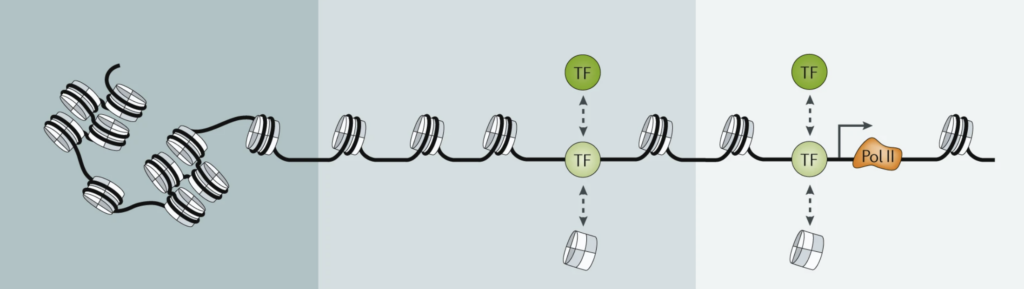
A diagram depicting chromatin accessibility from various stages, to closed, permissive, and open domains.

One of the most contentious debates in neuroscience has revolved around the question of whether the adult human brain can produce new neurons. Though there is evidence that rodents maintain a population of immature neurons throughout their lives, confirming this phenomenon in humans is troublesome, namely due to post-mortem tissue degradation and the lack of specific molecular markers. A new study by Disouky et al. (2026), published in Nature, carries out a deep dive into this process. Disouky et al. reveal that the “birth” of new neurons not only occurs in the adult human hippocampus but that its decline in Alzheimer’s disease is dictated by changes in the cell’s epigenetic landscape. In other words, while the sequence of the DNA remains the same, the chemical tags and structural packing of the genome changes, effectively deciding which genes are turned on or off.

To settle the debate, researchers analyzed over 355,000 individual cell nuclei from the hippocampi of young adults, healthy seniors, and people with Alzheimer’s. They discovered a clear assembly line in the brain where starter cells, known as neural stem cells, begin a transformation into neuroblasts. These cells then become Immature Neurons before finally graduating into mature granule neurons that are fully integrated into memory circuits. The team used a predictive calculation called RNA velocity to prove that these cells actually move through these stages, confirming that the adult human brain maintains a pool of neural stem cells. RNA velocity, by taking into account the concentration of various RNA populations, can project the dynamics within the cell (La Manno et al., 2018). In other words, a cell’s stage in development can be determined by what types of RNA it is producing.

The study’s most important discovery involves epigenetics, which dictates how the brain’s internal switches are managed. If DNA is like a massive library of books (genes), then epigenetics determines which books are actually open and readable. The researchers found that in Alzheimer’s disease, the problem isn’t just that cells are dying, but that the books for making new neurons are being slammed shut. This is known as a change in chromatin accessibility (Klemm et al., 2019). In Alzheimer’s patients, the number of immature neurons is slashed significantly compared to healthy individuals. Interestingly, in people with preclinical Alzheimer’s—those with early symptoms of Alzheimer’s—these DNA locks are beginning to appear. So, while the DNA itself remains the same, its expression differs.
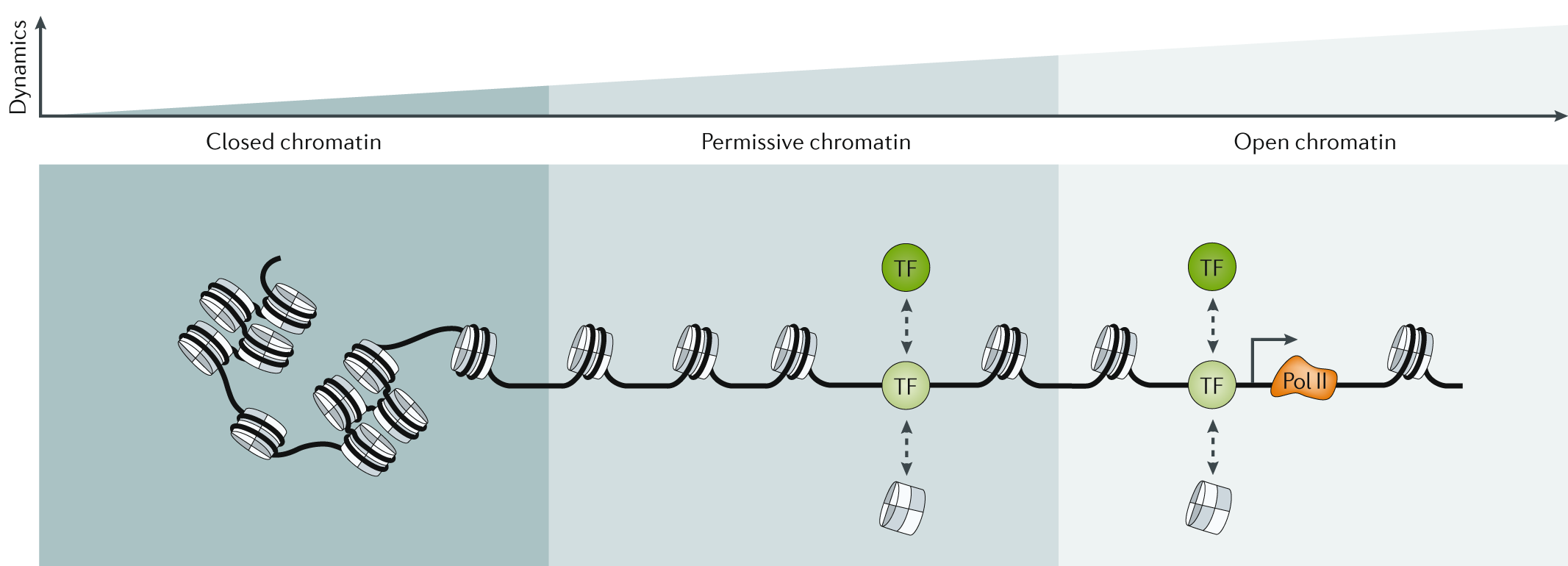
A diagram depicting chromatin accessibility from various stages, to closed, permissive, and open domains.
Chromatic accessibility allows for differences in DNA expression without directly altering its genetic sequence. Figure from Klemm et al., 2019

When the authors looked at a third population group known as SuperAgers (SA)—people over 80 years old with the memory capacity of someone in their fifties—they found a distinct profile of neurogenesis, new neuron formation. The brains of SuperAgers contained a significantly greater number of immature neurons compared to those with Alzheimer’s. Even after excluding potential outliers, the researchers observed a 2.5-fold increase in immature neurons in the SuperAger group compared to other cohorts. This suggests there is a “resilience signature” of neurogenesis that may play a role in maintaining exceptional memory capacity despite advanced age. This signature is primarily characterized by maintained chromatin accessibility in regions that are typically “locked” or downregulated in the Alzheimer’s brain.

Ultimately, this research shifts the focus of Alzheimer’s study from simple cell death to the underlying gene regulatory networks that govern how cells function and grow. By identifying the specific “activator” and “repressor” switches (transcription factors) that are active in SuperAgers versus those that are shut down in Alzheimer’s, the study provides a roadmap for future medical interventions. For example, targeting the specific chromatin regions that govern synaptic plasticity could potentially prevent or mitigate the deterioration of neurogenesis seen in dementia. While the study notes limitations due to the high variability of human brain samples and limited sample sizes, the findings highlight the critical role of epigenetics as a more definitive indicator of cognitive health than traditional gene expression alone. This suggests that the future of treating cognitive decline may lie in opening up the brain’s internal library in order to restore its natural ability to regenerate and remember.


References

Disouky, A., Sanborn, M. A., Sabitha, K. R., Mostafa, M. M., Ayala, I. A., Bennett, D. A., Lu, Y., Zhou, Y., Keene, C. D., Weintraub, S., Gefen, T., Mesulam, M., Geula, C., Maienschein-Cline, M., Rehman, J., & Lazarov, O. (2026). Human hippocampal neurogenesis in adulthood, ageing and Alzheimer’s disease. Nature, 652(8112), 1264–1273. https://doi.org/10.1038/s41586-026-10169-4

Klemm, S. L., Shipony, Z., & Greenleaf, W. J. (2019). Chromatin accessibility and the regulatory epigenome. Nature Reviews Genetics, 20(4), 207–220. https://doi.org/10.1038/s41576-018-0089-8

La Manno, G., Soldatov, R., Zeisel, A., Braun, E., Hochgerner, H., Petukhov, V., Lidschreiber, K., Kastriti, M. E., Lönnerberg, P., Furlan, A., Fan, J., Borm, L. E., Liu, Z., Van Bruggen, D., Guo, J., He, X., Barker, R., Sundström, E., Castelo-Branco, G., . . . Kharchenko, P. V. (2018). RNA velocity of single cells. Nature, 560(7719), 494–498. https://doi.org/10.1038/s41586-018-0414-6
Filed Under: Biology, Psychology and Neuroscience Tagged With: neurobiology, neuron, neuroscience

Philip Spyrou in the Spotlight

December 9, 2024 by Noah Zuijderwijk '25

“The lab and the art studio are fundamentally the same space; you have a material, a question you want to answer, and you experiment” – Philip Spyrou

Give a teen unfettered access to the internet and they might transform into a brain-rotten screenager. Luckily, in Philip Spyrou’s case, hours spent looking at Reddit feeds and YouTube videos did not translate into cognitive decline. In fact, quite the opposite was true; he used his internet privileges to teach himself how to cultivate life. As a high school sophomore, Philip experimented with hydroponics and tried to grow mushrooms using soil he made with whole grains and a pressure cooker. His resourceful and creative fascination with life led him to a chemistry and visual arts double major at Bowdoin College. He now studies the role of proteins in neuron function as a senior researcher in Professor Henderson’s chemistry lab.

When Philip showed me around the Henderson lab, he explained that proteins play a near-infinite number of crucial roles in biological processes. One such process is the formation of synapses in the brain. In simple terms, a synapsis is the coming together of two neurons to exchange information – a crucial mechanism for routine brain function. However, neurons need the ability to “crawl” around brain tissue before they can find other neurons and form synapses. SRGAP proteins enable neurons to develop finger-like protrusions from the cell membrane with which they can “crawl”. Philip studies how the membrane attracts these proteins.

Though one might think studying neurons requires a lab furnished with preserved brains in glass jars, Philip’s research (disappointingly) does not involve Frankensteinian techniques. In fact, Philip works with model cells called Giant Unilamellar Vesicles (GUVs), which are artificial membrane systems used to study cell functions. By modifying the GUV’s membrane, he observes how different membrane compositions attract SRGAP proteins. These observations can then be mapped onto neurons to understand how they develop the ability to “crawl” through brain tissue.
 

To study this neuron crawling mechanism, Philip has to think beyond the two dimensions of a textbook. After all, a protein’s three-dimensional structure is key to its function. In this regard, his time in the art studio has proven valuable to his work in the lab. Philip believes the lab and the studio aren’t all that different, and that working with clay and ceramics has trained him on how to gather materials, ask questions, and design experiments with a three-dimensional mindset.


“I like thinking visually, structurally, and three-dimensionally about the biological processes I study”


The three-dimensionality of Philip’s research unfolds at the molecular scale. It requires him to spend most of his time thinking about intangible processes. But, he says, it helps him to think of the applications of his research. For example, loss of proteins that enable neuron cells to crawl around the brain might be implicated in cognitive disabilities and memory loss. This is something he hopes to continue researching by earning a PhD with the goal of eventually becoming a full-time researcher.

As Philip continues on this path toward becoming a scientist, he finds it important to keep reminding himself of where his passion for science comes from. His love for understanding life originated in his backyard when he figured out how to grow plants and mushrooms. Though he does not foresee himself going back to researching those forms of life any time soon, he does want to keep tapping in to his fifteen-year-old self’s creative fascination for life.

Filed Under: Honors Projects Tagged With: biochemistry, Biology, brain, chemistry, honors, neuron, neuroscience, student

Yasemin Altug in the Spotlight

December 8, 2024 by Noah Zuijderwijk '25

“I am delirious in lab. You have to be to have fun” – Yasemin Altug

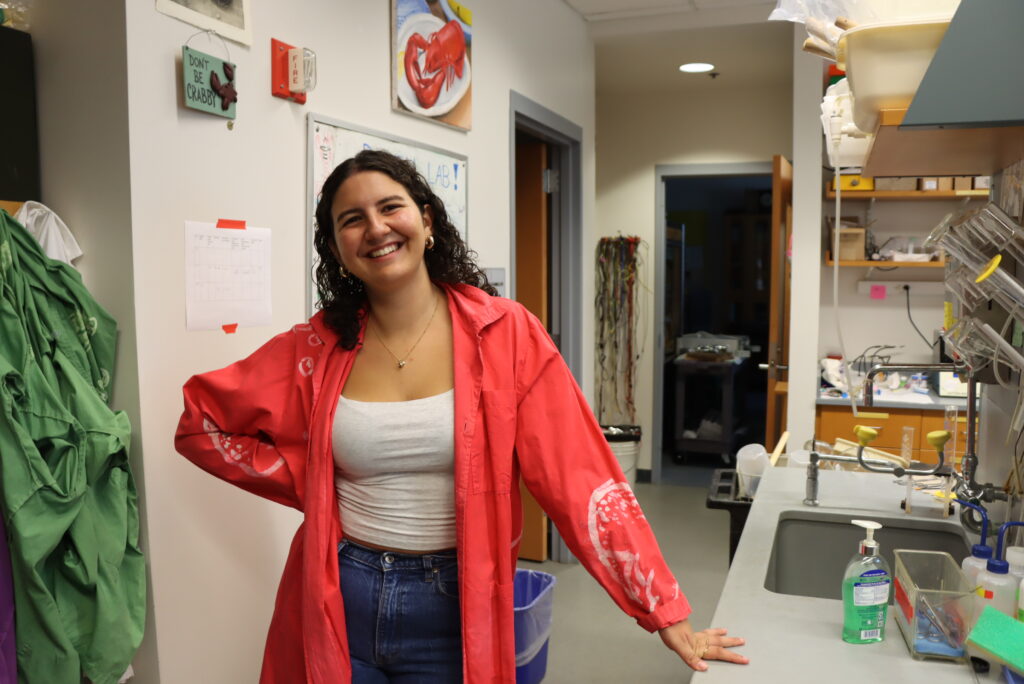
When she was 12 years old, Yasemin cared little for popular book series like Percy Jackson or Harry Potter. Instead, she read Beyin Nasıl Çalışır? – How Does the Brain Work? in Turkish – before going to sleep. At that age, her mom said she was a “special child”. As the years passed, her interest in neuroscience only grew. Now, Yasemin is an undergraduate senior researcher in Bowdoin College’s Powell lab where she studies the lobster cardiac nervous system (hence the red lab coat).

On a late September morning, Yasemin invited me into the lab. As she gathered ice to numb the lobster, she explained that small fluctuations in temperature can disrupt crucial functions mediated by the lobster’s nervous system, like breathing and pumping blood. Whereas our warm-blooded bodies can regulate our body temperature, cold-blooded creatures, like lobsters, are at the whim of their environments.

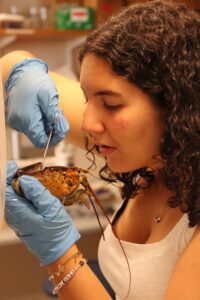
In the Gulf of Maine, that environment is heating up as a result of global warming and shifting currents. To understand how the lobster’s cardiac nervous system responds, Yasemin investigates how, or even if a specific heart-modulating hormone is involved in warming compensation. To do so, she measures the lobster’s heartbeat at various temperatures in the presence and absence of the hormone. When cardiac neurons are active, they leave behind identifiable signatures in the heartbeat force signal on the cardiogram. Yasemin can use these signatures to derive whether the hormone is affecting activity in specific cardiac neurons, and if warming conditions change those hormone-neuron interactions. She can then use that information to construct a more complete picture of ocean warming effects on lobsters.

To conduct her experiments, Yasemin has to pay the cost of a living organism as she collects the lobster from its tank, numbs it, dissects it, and cannulates its heart. This meticulous work comes with feelings of discomfort and guilt. To overcome those feelings, she focuses on how her studies might help the lives of people living in Maine. In this state, a string of lobster-dependent communities lines the coast. Lobsters hold ecological, cultural, and economic value to these communities. After all, tourists do not come to Maine for its chicken sandwiches. Therefore, warming oceans pose a threat not only to Maine’s coastal ecosystem, but also its culture and to people’s livelihoods. The relevance of her research in all these contexts makes it worth the effort.


“I have to do what I have to do for the net positive outcomes of research. I think this is more important than my discomfort.”


Beyond the moral dilemma of working with living creatures, Yasemin also shared that it has been particularly difficult to navigate academia in her second language. On top of that, she comes from a place where some people – especially women – are not always given opportunities to enter STEM fields. During her time in classes at Bowdoin, she saw other students express themselves fluently, get better grades, and achieve better dissections in lab. It triggered her imposter syndrome. But the curiosity and drive of that little girl who used to read Beyin Nasıl Çalışır? before bed never left her. Yasemin realized that the skills often socially expected of women – like being a good listener, working with people, and problem solving – are the most important skills in the lab. Her message to other women in STEM is to not count themselves out:

“Being a good scientist is not about understanding the concepts with ease, it’s not about being perfect, it’s about being able to deal with mishaps… because scientists don’t care if you know how to hold a pipet, they care if you can learn how to hold a pipet.”

Filed Under: Honors Projects Tagged With: honors, lobsters, neuroscience, student

Primary Sidebar

CATEGORY CLOUD

Biology Chemistry and Biochemistry Computer Science and Tech Environmental Science and EOS Honors Projects Math and Physics Psychology and Neuroscience Science

RECENT POSTS

  • New developments in understanding plankton transport May 12, 2026
  • A Promising New Treatment for Glioblastoma Patients: Personalized Neoantigen Peptide Vaccines May 7, 2026
  • The Association Between Tooth Loss and Cognitive Decline May 4, 2026

FOLLOW US

  • Facebook
  • Twitter

Footer

TAGS

AI AI ethics Alzheimer's Disease antibiotics artificial intelligence bacteria Bathymetry Biology brain Cancer Biology Cell Biology Chemistry and Biochemistry Chlorofluorocarbons climate change cognitive Computer Science and Tech CRISPR Dentistry Depression Dermatology dreams emergency medicine epigenetics Ethics Genes Gut microbiota honors Marine Biology Marine Mammals Marine noise Medicine memory Montreal Protocol neurobiology neuron neuroscience Nutrients Ozone hole Psychology and Neuroscience seabirds sleep student Technology therapy Women's health

Copyright © 2026 · students.bowdoin.edu