• Skip to primary navigation
  • Skip to main content
  • Skip to primary sidebar
  • Skip to footer

Bowdoin Science Journal

  • Home
  • About
    • Our Mission
    • Our Staff
  • Sections
    • Biology
    • Chemistry and Biochemistry
    • Math and Physics
    • Computer Science and Technology
    • Environmental Science and EOS
    • Honors Projects
    • Psychology and Neuroscience
  • Contact Us
  • Fun Links
  • Subscribe

emergency medicine

From Pack to Patient: Improvising Stability in the Backcountry

May 3, 2026 by Martina Tognato Guaqueta

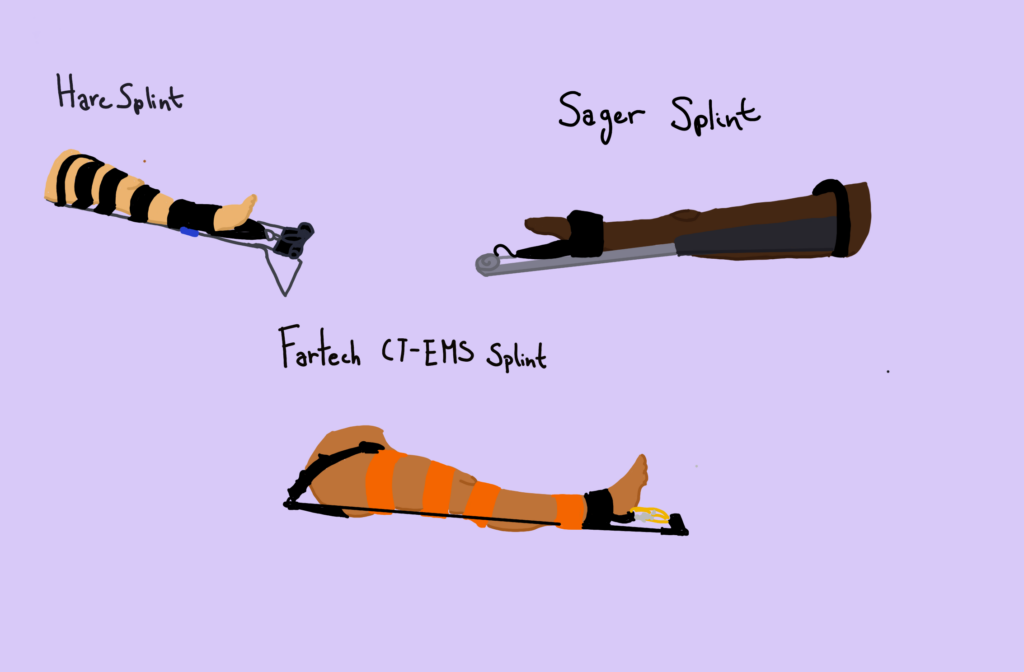
Three tyoes of femur traction splints

In remote and wilderness environments, injuries that are manageable in hospitals can quickly become life-threatening due to delayed access to medical care. Femur fractures are particularly dangerous because they cause severe pain and often substantial internal blood loss. Without rapid stabilization, patients may experience shock before reaching definitive treatment (Broken Femur). Considering that evacuation from remote areas may take hours or even days, effective field stabilization is critical.

In modern emergency medicine, traction splints are commonly used to stabilize femoral fractures during transport. These devices apply longitudinal traction to the injured leg, helping align bone fragments. By maintaining proper alignment, traction splints can reduce pain and limit additional bleeding, making them part of the pre-hospital care toolkit.

In wilderness settings, however, rescuers and outdoor travelers often lack access to specialized medical equipment. As a result, wilderness medicine training frequently teaches practitioners how to construct improvised traction splints using available materials, such as sticks or clothing. 
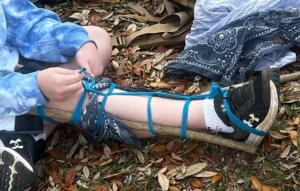
wilderness traction splint showing the lower leg
Stick to It: Mastering the Art of Improvised Splint Techniques. Retrieved May 3, 2026, from https://www.sixptsurvival.com/post/stick-to-it-mastering-the-art-of-improvised-splint-techniques

Despite their widespread use in training, surprisingly little empirical research has evaluated the effectiveness of traction splints in prehospital care. Even fewer studies have examined whether improvised traction splints can generate adequate traction or provide stability comparable to commercially manufactured devices (Weichenthal et al., 2012). This lack of evidence raises an important question for wilderness medicine practitioners: can improvised traction splints function as reliable alternatives when commercial equipment is unavailable?

To address this question, Weichenthal and colleagues conducted a pilot study comparing an improvised traction splint with three commercially available devices. The researchers designed a prospective randomized crossover study involving 10 healthy volunteers. Each participant tested all four splints, allowing the researchers to directly compare device performance.

Participants were placed in four traction splints in randomized order: the Hare traction splint, the Sager splint, the Faretech CT-EMS splint, and an improvised traction splint constructed using standard wilderness first aid techniques. Each device remained in place for 30 minutes before measurements were taken.
Three types of femur traction splints
Three types of traction splints were used as comparisons for the improvised traction splint. Illustration by Martina Toganto Guaqueta

The primary outcome measured in the study was the amount of traction force generated after 30 minutes. Traction force was measured in pounds to determine whether each splint produced clinically appropriate levels of traction. Researchers also assessed outcomes related to patient experience. After each trial, participants rated the comfort and stability of the splint on a scale from 1 to 10 and reported any side effects, such as pain or numbness.

The results showed that all four devices generated similar traction forces, ranging from 10.4 to 13.3 pounds. These values fall within the commonly recommended guideline of approximately 10 percent of a patient’s body weight, indicating that each device produced clinically adequate traction (Davis et al., 2026). Importantly, the improvised traction splint performed comparably to the three commercial splints in this primary measure.

Participants’ subjective ratings also showed minimal differences among the devices. Comfort and stability scores were similar across all four splints, suggesting that the improvised splint did not compromise the user experience. Side effects, including mild discomfort and occasional numbness, were reported with every splint tested. However, these effects were not unique to the improvised device; in fact, the improvised splint produced fewer reported side effects than some commercial splints.

Although these findings suggest that improvised traction splints may be effective, several limitations must be considered. First, the study included only 10 participants, limiting the statistical power and generalizability of the results. Larger studies would be needed to confirm these findings. Additionally, the participants were healthy volunteers rather than patients with actual femur fractures. In real injuries, pain, swelling, and muscle spasms could influence both splint performance and patient comfort. The study was also conducted in a controlled environment, not during an actual wilderness scenario. In practice, splints may remain in place for extended periods while patients are transported across uneven terrain or exposed to harsh environmental conditions. These factors could affect how effective the improvised devices are.

Despite these limitations, the study provides preliminary evidence that improvised traction splints can generate traction comparable to commercial devices while maintaining similar levels of comfort and stability. In the back country, where access to specialized equipment may be limited, the ability to improvise effective stabilization methods is an essential skill. Further research involving patients with actual femur fractures, larger participant groups, and real evacuation scenarios would help clarify the clinical effectiveness of improvised traction splints. Nevertheless, this pilot study suggests that when commercial devices are unavailable, improvised traction splints may serve as a practical and potentially effective tool for stabilizing femur fractures in wilderness settings.


This article is based on Lori Weichenthal’s Improvised Traction Splints: A Wilderness Medicine Tool or Hindrance?. 


References:

Broken Femur: Causes, Symptoms, and Treatment. (n.d.). Cleveland Clinic. Retrieved May 3, 2026, from https://my.clevelandclinic.org/health/diseases/22299-broken-femur

Davis, D. D., Ginglen, J. G., Kwon, Y. H., & Kahwaji, C. I. (2026). EMS Traction Splint. In StatPearls. StatPearls Publishing. http://www.ncbi.nlm.nih.gov/books/NBK507842/

Stick to It: Mastering the Art of Improvised Splint Techniques. (n.d.). Retrieved May 3, 2026, from https://www.sixptsurvival.com/post/stick-to-it-mastering-the-art-of-improvised-splint-techniques

Weichenthal, L., Spano, S., Horan, B., & Miss, J. (2012). Improvised Traction Splints: A Wilderness Medicine Tool or Hindrance? Wilderness & Environmental Medicine, 23(1), 61–64. https://doi.org/10.1016/j.wem.2011.12.005
 

Filed Under: Biology Tagged With: emergency medicine, fractrures, WFR, wilderness, wilderness medicine

Rethinking Fluids in Pediatric Septic Shock: Early Adrenaline Instead of More Fluid

May 3, 2026 by Martina Tognato Guaqueta

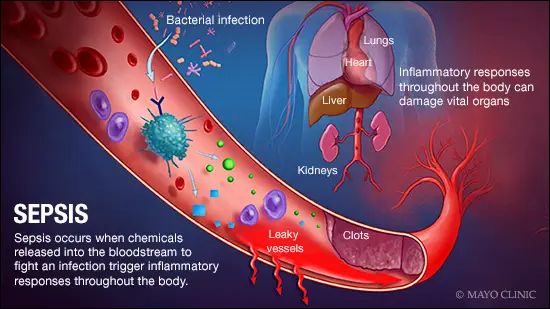
A diagram showing the stages and symptoms of sepsis

Septic shock is a severe complication of infection in which the body’s immune response becomes dysregulated. Those in septic shock experience impaired circulation, poor tissue perfusion, and ultimately organ dysfunction (What Is Septic Shock?). In pediatric patients, septic shock remains a major cause of critical illness, with mortality rates estimated between 17–32%. Pediatric cases often present differently from adult cases, most notably, children decompensate very fast and have a “cold shock” presentation. This means that rather than the vasodilation characteristic of “warm shock,” they experience low cardiac output and high vascular resistance. Essentially, children will appear stable, then quickly nosedive (Condition Topics). 

To improve oxygen delivery to tissues and restore circulating blood volume, current treatment guidelines advocate rapid fluid resuscitation with 40–60 mL/kg of intravenous fluids in the first hour of sepsis and treatment. Interestingly, there is little evidence to support this guideline, and growing observational data indicate that excessive fluid administration may worsen outcomes, including increased mortality and the need for respiratory assistance. The guideline itself is based on an adult model; however, it does not translate to a pediatric situation. Alternative resuscitation techniques are becoming more popular as a result of these worries, especially if starting vasoactive drugs earlier could lessen the requirement for large fluid quantities while preserving hemodynamic stability. Hemodynamic stability refers to stable blood pressure, flow, and adequate oxygen delivery. 

To investigate whether earlier initiation of vasoactive support could reduce fluid exposure in pediatric septic shock, Harley et al. conducted the Resuscitation in Pediatric Sepsis Randomized Controlled Pilot Platform Study in the Emergency Department  (RESPOND ED). This was an open-label, randomized controlled study in four pediatric emergency departments throughout Australia. The trial was made up of  40 children with septic shock, ranging from 28 days to 18 years. 

Children in the early-adrenaline group received an initial 20 mL/kg fluid bolus followed by early initiation of adrenaline. On the other hand, the standard-care group received 40–60 mL/kg of fluid resuscitation before administering medications that force the heart to contract (inotropes), consistent with current guidelines. A fluid bolus is the rapid administration of intravenous fluids. The primary aim of the study was to evaluate the feasibility of future related studies, while an exploratory outcome measured 28-day survival free of organ dysfunction.

This study demonstrated that the protocol was feasible. Adrenaline was given significantly earlier in the intervention group (~16 minutes) compared with the standard-care group (~49 minutes), which resulted in reduced fluid exposure. The early-adrenaline group received no additional fluid beyond the initial amount administered, while the standard-care group received around 20 mL/kg more fluid within the first 24 hours. 

Clinical outcomes were similar between groups, with no mortality observed, comparable organ dysfunction–free days, and similar pediatric intensive care unit (PICU) admission rates and length of stay. Importantly, the intervention appeared safe, with no serious adverse events, such as extravasation injuries or limb ischemia associated. These circulation-based conditions are common side effects of peripheral adrenaline administration.

The RESPOND ED pilot trial demonstrates that an early-adrenaline, fluid-sparing resuscitation strategy is feasible and safe in pediatric emergency departments. While the study was not made to detect differences in mortality or major clinical outcomes, it showed that clinicians can successfully initiate vasoactive support earlier and reduce overall fluid exposure without increasing adverse events. These findings challenge the long-standing fluid-first treatment approach and suggest that earlier hemodynamic support may be a viable alternative approach. Future research will need to build on these results through larger trials, optimized dosing strategies, and broader patient populations to better determine whether early vasoactive therapy can improve outcomes and better define treatment guidelines for pediatric septic shock.


This article was based on Amanda Harley’s Early Resuscitation in Paediatric Sepsis Using Inotropes – A Randomised Controlled Pilot Study in the Emergency Department (RESPOND ED): Study Protocol and Analysis Plan. 


References 

Condition Topics. (n.d.). Yale Medicine. Retrieved May 3, 2026, from https://www.yalemedicine.org/conditions

Harley, A., George, S., King, M., Phillips, N., Keijzers, G., Long, D., Gibbons, K., Bellomo, R., & Schlapbach, L. J. (2021). Early Resuscitation in Paediatric Sepsis Using Inotropes – A Randomised Controlled Pilot Study in the Emergency Department (RESPOND ED): Study Protocol and Analysis Plan. Frontiers in Pediatrics, 9, 663028. https://doi.org/10.3389/fped.2021.663028

What Is Septic Shock? (n.d.). Cleveland Clinic. Retrieved May 3, 2026, from https://my.clevelandclinic.org/health/diseases/23255-septic-shock

Filed Under: Biology Tagged With: emergency medicine, Medicine, Pediatrics

Primary Sidebar

CATEGORY CLOUD

Biology Chemistry and Biochemistry Computer Science and Tech Environmental Science and EOS Honors Projects Math and Physics Psychology and Neuroscience Science

RECENT POSTS

  • Carcinization: Is it Happening to Everybody? May 13, 2026
  • Efficacy of Neoantigen Vaccines against Triple Negative Breast Cancer May 12, 2026
  • New developments in understanding plankton transport May 12, 2026

FOLLOW US

  • Facebook
  • Twitter

Footer

TAGS

AI AI ethics Alzheimer's Disease antibiotics artificial intelligence bacteria Bathymetry Biology brain Cancer Biology Cell Biology Chemistry and Biochemistry Chlorofluorocarbons climate change cognitive Computer Science and Tech CRISPR Dentistry Depression Dermatology dreams emergency medicine epigenetics Ethics Genes Gut microbiota honors Marine Biology Marine Mammals Marine noise Medicine memory Montreal Protocol neurobiology neuron neuroscience Nutrients Ozone hole Psychology and Neuroscience seabirds sleep student Technology therapy Women's health

Copyright © 2026 · students.bowdoin.edu